Alert Issued Urging People to Monitor Themselves for ‘Unusual Fatigue’
A slew of air quality alerts was issued across the Upper Midwest on Thursday, advising some residents to seek medical attention if they experience symptoms such as “unusual fatigue.”
Why It Matters
Residents across Wisconsin faced potentially hazardous air quality on Thursday due to a mass of wildfire smoke drifting from Canada. With fine particulate matter (PM2.5) levels reaching thresholds deemed unhealthy for sensitive groups, state officials responded by issuing advisories for more than a dozen counties.
The move underscored the ongoing public health risk posed by recurring wildfire smoke events, which have grown increasingly common in recent years as large blazes persist in Canadian provinces. Vulnerable individuals—especially those with heart or respiratory conditions, children, and older adults—have been warned that even brief exposure can trigger symptoms or exacerbate underlying health issues.
What To Know
The Wisconsin Department of Natural Resources (DNR) issued an air quality advisory beginning at 6 a.m. Thursday, impacting the counties of Ashland, Barron, Bayfield, Burnett, Chippewa, Douglas, Dunn, Iron, Pepin, Pierce, Polk, Price, Rusk, Sawyer, St. Croix, Vilas, and Washburn.

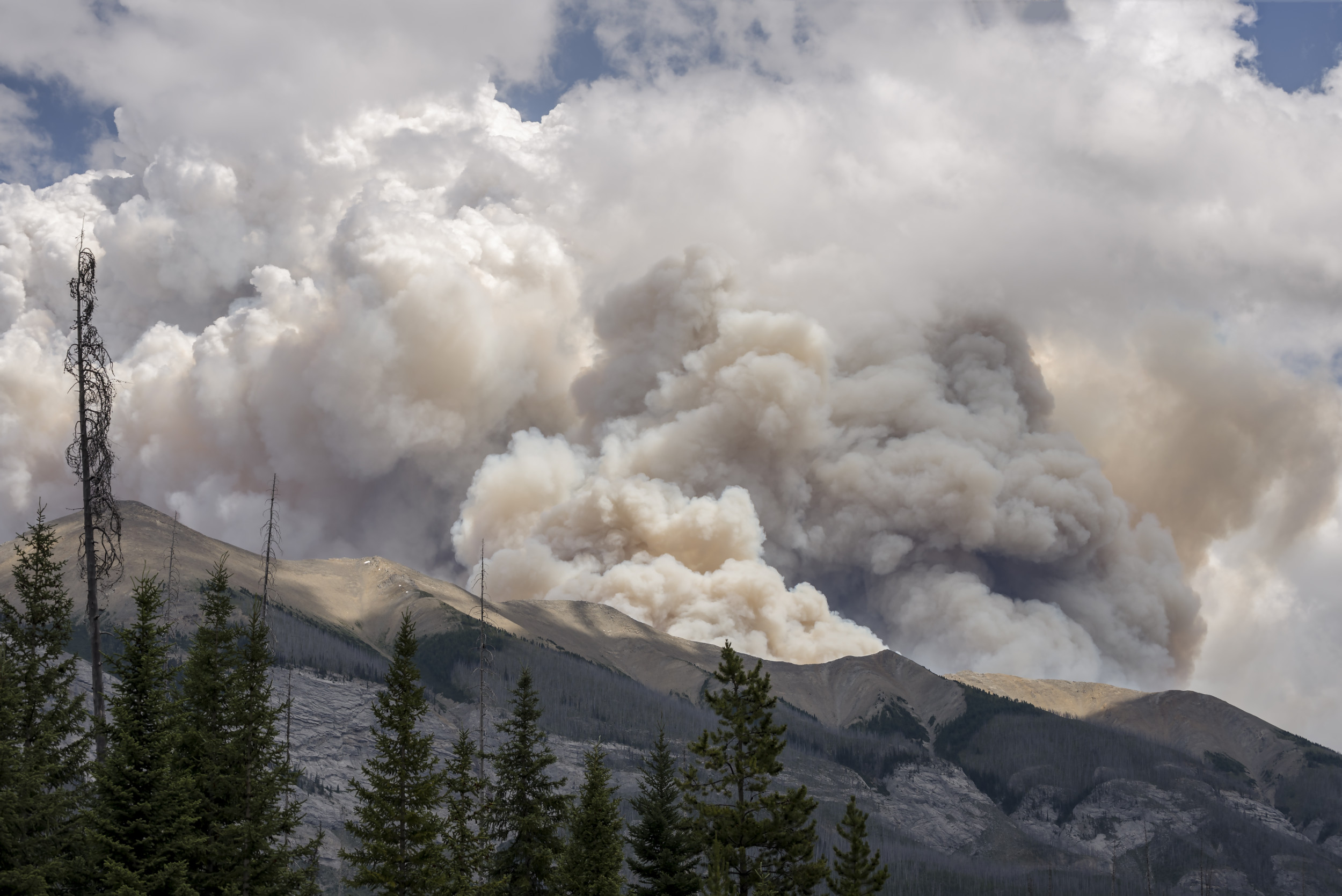
Burning forest fire in British Columbia in Kootenay National Park.
James_Gabbert/Getty
According to state officials, the Air Quality Index (AQI) for PM2.5—tiny particles capable of penetrating deep into the lungs—was forecast to reach levels classified as “Unhealthy for Sensitive Groups” (USG) and, in some areas, “Unhealthy.”
The advisory stemmed from dense smoke originating in ongoing Canadian wildfires, particularly from Saskatchewan and Manitoba, that migrated south into the Upper Midwest. The smoke plume was expected to reach the Duluth/Superior area between 6 and 9 a.m. and gradually move southeast, extending impacts throughout the day and possibly into the weekend.
As meteorological conditions change, the alert area is scheduled to be updated in response to real-time monitoring and predictive models.
The official alert recommended that residents—especially those with preexisting lung or heart disease, asthma, young children, and older adults—take precautionary measures. These include limiting the intensity and duration of outdoor activities, moving activities indoors if possible, and staying alert for any new or worsening symptoms.
For all residents, staying indoors and keeping windows closed remained a key precaution while smoke persists in the area.
Health officials urged residents to monitor themselves for symptoms associated with poor air quality. Key symptoms to watch for include:
- Coughing
- Shortness of breath
- Throat irritation
- Unusual fatigue
- Chest discomfort
- Heart palpitations
People with asthma were advised to follow their asthma action plans and keep quick-relief inhalers readily available. Those with heart disease were instructed to contact their health care providers if symptoms such as palpitations, shortness of breath, or unexpected fatigue developed. The advisory also encouraged all residents, including healthy individuals, to keep outdoor activities shorter and less intense, and to go inside if any symptoms are present.
There have been 11 air quality alerts so far this year, more than three times those issued in 2024.
What People Are Saying
A Wisconsin DNR spokesperson told Newsweek: “Wildfires occur frequently in the US and Canada throughout the summer months, so we will continue watching for potential smoke impacts as long as there are active wildfires.”
Air quality alert issued in Wisconsin: “People with heart disease: Symptoms such as palpitations, shortness of breath, or unusual fatigue may indicate a serious problem. If you have any of these, contact your health care provider.”
A Wisconsin DNR webpage about wildfire smoke: “Larger and more frequent wildfires are a growing public health concern, as wildfire smoke from larger fires can travel and impact air quality hundreds or even thousands of miles away and cause a wide range of health impacts based on a person’s sensitivity to pollutants and the amount of pollutants in the air.”
What Happens Next
The air quality advisory remained in effect through Thursday with a possibility for extension or adjustment depending on updated smoke projections and AQI readings. As southerly winds are forecast to return over the weekend, state officials anticipated that smoke may be pushed farther north, allowing air quality to improve gradually in majority of the state. However, lingering smoke impacts could require advisories to remain in effect for certain regions.
Update 7/24/2025, 2:46 p.m. Eastern time: This article was updated with additional information.